



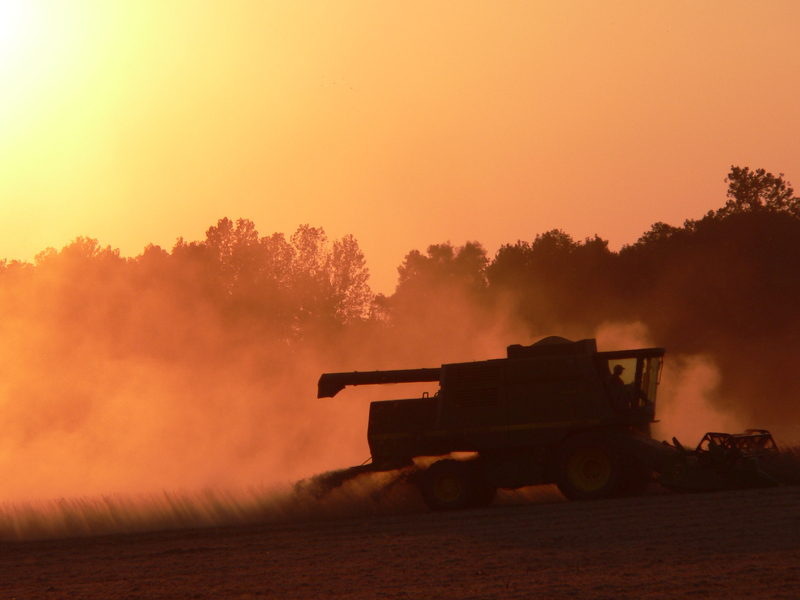
As of Oct. 20, harvest of major crops is 92 per cent complete in the North West Region.
That’s according to the latest crop report by the Agriculture Financial Services Corporation (AFSC) and the Government of Alberta.
While 85 per cent of canola is combined, another nine per cent is in the swath. Canola is expected to grade 71 per cent 1 Can. and 14 per cent 2 Can., while dry peas are expected to have 29 per cent grade 1 Can. and 61 per cent grade 2 Can.
It is expected that 59 per cent of hard red spring wheat, 14 per cent of eligible malt barley varieties and 41 per cent of oats will grade 1 C.W. Meantime, Pasture growth conditions are rated as three per cent poor, 32 per cent fair, 56 per cent good and 10 per cent excellent.
Dryland hay production averaged 2.1 tons per acre for first-cut hay, while second-cut hay averaged 1.5 tons per acre across the region.
The 2026 harvest continues at a reduced pace, extending later than normal, the AFSC reports. There are not enough comparable years to provide five-year and 10-year comparisons for this week’s timeframe, however. Slower progress remains mainly due to moisture, both in the crop and in the field, which have limited daily drying potential as temperatures cool.
Provincial harvest of major crops advanced six per cent over the past week to reach 94 per cent complete.
The report says harvest is virtually complete in the South and Central regions, with mostly later maturing crops remaining to harvest. The North East and North West regions are 91 and 92 per cent complete, while the Peace Region reached 81 per cent complete. All three northern regions note that remaining crop to harvest mostly consists of swathed canola and later maturing cereals. In addition to cooler temperatures slowing the drying of grain in the field, soil moisture in lower-lying areas continues to create challenging conditions for operating harvest equipment, while winds in some areas were strong enough to move swaths around the field.
As we reach the tail end of harvest, the AFSC says the crop yield estimates remain mostly unchanged. The five-year dryland provincial yield index still estimates that major crops will yield 21 per cent above the five-year average.
Regional major crop yields in comparison to the five-year average in the South are expected to be 60 per cent above, in the Central are expected to be 24 per cent above, in the North East are expected to be eight per cent above and in the Peace are expected to be 14 per cent above. The North West Region is expected to yield nine per cent below its five-year average yield.
Provincially, the report says spring wheat is currently expected to average 54.4 bushels/acre, barley is expected to yield 73.2 bushels/acre, oats are expected to yield 79.2 bushels/acre, canola is expected to yield 37.8 bushels/acre and dry peas are expected to yield 43.3 bushels/acre.
While estimated crop yields have remained generally stable, provincial crop quality has declined slightly in several crops as harvesting progressed into later-maturing fields. The expected percentage of cereal crops with top quality ratings are currently (two-week change) at 57 (-6) per cent for 1 C.W. spring wheat, 61 (+1) per cent for 1 C.W durum and 20 (-2) per cent for 1 C.W. oats. For barley, ratings of 1 C.W. are expected to apply to 31 (zero) per cent of the crop consisting of malting varieties and for 59 (zero) per cent of the crop consisting of other barley varieties. It is estimated that 88 (-1) per cent of canola is rated as 1 Can. and that 27 (zero) per cent of dry peas are rated as 1 Can.
Field conditions have trended drier over the past week, although ample soil and sub-soil moisture remains across the province. Provincial surface soil moisture ratings decreased four per cent to 65 per cent good-to-excellent. Regional surface soil moisture good-to-excellent ratings (weekly change) were 67 (-5) per cent for the South, 44 (-8) per cent for the Central, 71 (-2) per cent for the North East, 74 (+5) per cent for the North West and 93 (zero) per cent for the Peace, the AFSC reports.
Sub-surface soil moisture conditions continued to ease across the province over the past week, reflecting seasonal drying trends and limited moisture recharge. Provincial sub-surface soil moisture reportedly decreased by three per cent and is now rated 61 per cent good-to-excellent.
Regional sub-surface soil moisture good-to-excellent ratings (weekly change) were 49 (-3) per cent for the South, 50 (-5) per cent for the Central, 72 (-2) per cent for the North East, 69 (-3) per cent for the North West and 98 (-1) per cent for the Peace. Overall, the AFSC reports that moisture reserves remain generally favourable across the province; however, the recent decline highlights the need for additional moisture recharge heading into winter to support soil conditions for the 2027 growing season.
Due to cooler temperatures and typical late-October conditions, producers are beginning to bring cattle home from pasture as forage growth continues to slow. Currently, pasture growth conditions are rated 48 per cent good-to-excellent provincially. Regional ratings for pasture growth are 68 per cent good-to-excellent in the South, 24 per cent in the Central, 46 per cent in the North East, 65 per cent in the North West and 47 per cent in the Peace Region.
Dryland hay production is largely complete across the province, with producers reporting variable success in harvesting second-cut hay due to regional weather conditions. Weather conditions vary across the province, impacting ability to harvest dryland hay second cut.
Provincially, estimated total dryland hay production consists of 88 per cent first-cut and 12 per cent second-cut hay. First-cut dryland hay averaged 1.9 tons per acre, while second-cut averaged 1.5 tons per acre, according to the report. Overall, second-cut dryland harvest success and yields varied, reflecting regional differences in weather conditions throughout the growing season.
Provincial total irrigated hay production is estimated to consist of 54 per cent first-cut, 41 per cent second-cut and five per cent third-cut, says the AFSC. Irrigated first-cut yields averaged 2.7 tons per acre, second-cut averaged 2.2 tons per acre and third cut averaged 1.7 tons per acre.
The North West Region includes Drayton Valley, Barrhead, Edmonton, Leduc and Athabasca.






Comments